Thursday, January 21, 2016

The other MCG: Milson Community Garden

One of six stories behind the 'In the Garden' interviews from the 2015-16 Summer Series of Talking Plants on ABC Radio National (copied from ABC RN homepage).

The other MCG: Milson Community Garden

Wednesday 6 January 2016 2:10PM
Tim Entwisle
Though it's not as famous as its Melbourne namesake, the Milson Community Garden in the northern Sydney suburb of Kirribilli provides its volunteer gardeners with a place to interact with nature and get out of the house. Tim Entwislereports from a veggie patch with a view.
A few years ago we sold our family home and bought a small apartment on the more modest side of Kirribilli, an otherwise well-to-do suburb jutting into Sydney Harbour near that famous bridge. When we visit Sydney we walk to a small park nearby, Milson Park, on the waterfront.
[It's a place to] drift, muse, think about plants, or simply look at the sky and clouds.
BRUCE, COMMUNITY GARDENER
This 100-year-old park has beautifully lush lawns all year round, a small cluster of tall cotton palms, a couple of stately Moreton Bay figs and some lovely old frangipanis. But what has always intrigued me is the small vegetable plot on the sunny side of the park.
Granted, it's as neatly manicured as the rest of the park, but how and why is it there?
I visited on a Sunday morning, when a dozen or so volunteers—and their eager children—were hard at work watering, weeding and picking. It was a typical day in the Milson Community Garden, or MCG (a sacrilegious acronym in Melbourne but here either cheeky or oblivious, I'm not sure which). 
Six years ago a group of dog walkers met and mused about establishing a community garden in the area, daring to suggest it could become a part of this popular municipal park. To kick things off they planted herbs in some of the garden beds to see what local interest they could generate—today we'd call it guerrilla gardening.
They attracted interest all right, but from the council gardeners, who promptly removed these weedy plantings. The dog walkers replanted, the gardeners re-weeded. And so on.
To break the impasse, the fledgling community garden group approached the then mayor of North Sydney, Genia McCaffery, who responded enthusiastically. She and her fellow councillors suggested they put in a submission and, well, there is now a community garden in Milson Park.
As befits a garden in such a prestigious location, the design is very formal, almost medieval. There are also practical considerations. Beds are raised high to make it easier for the more mature volunteers to tend the garden—no bending and back straining here.
The plantings include the usual suspects—tomatoes, beans, lettuce and common herbs—along with a selection of exotic and heirloom varieties. It seems there is a strong Japanese influence, led perhaps by Yumi Sakauchi, the garden's operation coordinator.
One of the highlights on my visit was a small purple shrub called shiso (Perilla frutescens). Its leaves, green or purple, are used as a salad or sashimi garnish and as a flavouring for pickled plums (umeboshi).
Alongside the Asian greens (and purples), are heirloom varieties of more common vegetables, such as the impressive tromboncino, a type of zucchini that looks like its musical instrument namesake. Like your regular zucchini, the fruit is better eaten when young and small (Sakauchi does recall a 60 centimetre long tromboncino that was quite edible, but not in one sitting).
There are lots of pretty flowers as well, some deliberate companion plantings to discourage pest insects or, in the case of purple flowered plants, to attract bees. Others appear spontaneously from windblown seed or in fresh compost, and if they are pretty enough they stay.
I asked Sakauchi whether everyone has their own patch within the garden, as is the case with London allotments. The answer is no. Here everyone contributes to a common harvest and the work and produce are shared more or less equally. At the end of today's session—a sticky Sydney summer day—the ripe fruit or vegetables will be shared among everyone who's there at the end. Supporters can pick any herbs or leaves they want during the week.
The gate is always open, so some uninvited harvesting is inevitable. Thankfully, though, most visitors respect that volunteers are running this garden and the produce is part of their reward.
The other big attraction for volunteers is simply the chance to spend time outdoors, with friends and among plants. Bruce, a regular for four years, lives in unit without a garden. He says it's innate to want to grow things, and a few pot plants on the balcony are not enough.  
For Bruce, and for Sakauchi, the MCG is a place for interacting with nature in the middle of a vibrant city. As Bruce puts it, '[It's a place to] drift, muse, think about plants, or simply look at the sky and clouds.'

A gardening show with a twist. Talking Plants is a witty and at times provocative discussion show on all things botanical.

Colour in a dead garden

One of six stories behind the 'In the Garden' interviews from the 2015-16 Summer Series of Talking Plants on ABC Radio National (copied from ABC RN homepage).

Colour in a dead garden (inside the artist's studio)

Friday 8 January 2016 9:31AM
Tim Entwisle
Les Musgrave has won many accolades for his garden in the NSW Southern Highlands. Meanwhile, his wife Elaine, a botanical artist, has created something more unusual: an indoor garden populated entirely by dead and dying plants.Tim Entwisle takes a look inside her studio.
Elaine and Les Musgrave have a gorgeous garden in the Southern Highlands, about 100 kilometres south of Sydney. In a region with a reputation for beautiful gardens, Les has created something particularly attractive, with lots of colour, exotic perfumes and sweeping vistas.
But I was visiting for the other Musgrave garden, which is inside an artist's studio that used to be a horse stable. It's a garden full of dead plants.
I see something and I've just got to paint it.
ELAINE MUSGRAVE, BOTANICAL ARTIST
Elaine, a botanical artist with more than 20 years experience, attracts as many accolades for her paintings as Les gets for his garden landscape. They open their garden and studio to the public each year.
You'll be able to see some of Elaine's artworks in an upcoming florilegium—a collection of paintings of plants from a particular place, in this case Royal Botanic Garden Sydney. The project started 10 years ago, when I was executive director of the Royal Botanic Gardens and Domain Trust, and includes work by artists from Australia and overseas. A book will be published in March 2016, accompanied by an exhibition at the Museum of Sydney.
Elaine's four contributions to the florilegium were all painted in the adapted stable. 'If you look around my studio, there are a lot of dead things,' she says. And indeed there are. Many of the plants arrive fresh from the living garden before slowly decaying as Elaine paints their particulars.
I look at one with curling brown leaves and Elaine explains she can still get vital information for her painting from this specimen.  The way she arranges the leaves and the general composition depends on botanical accuracy and a common reference point. She can always chase up a fresh leaf from outside for the finer detail.
Sometimes fresh material isn't needed at all. Artichoke flowers, says Elaine, become more beautiful as they dry. 'I didn't realise the seeds keep popping out,' she says. 'They fly around the studio.'
The individual seeds look like insects or spiders, and cling to any unswept surface. There are some on the bookcase, which Elaine says have been there three years. And she avoids dusting a shelf that is now home to an odd assortment of plant detritus: chestnuts from a garden across the road, banksia cones, and the seed heads of poppies and Formosa lilies.
'I love dead and dying subjects—anything to do with fungi and seed pods,' says Elaine. That said, she does paint in a whole variety of colours. 'I don't do a lot of yellow,' she confesses. 'I see something and I've just got to paint it.'
Elaine says she likes to paint fruits and vegetables. I ask her why. 'They don't move as much as flowers.'
I hadn't thought about it this way, but time moves at a different pace for a botanical artist. For us, a flower is pretty static and looks the same for at least as long as we look at it. The artist, staring at it minute by minute, day after day, sees it turn towards the light, flop over and lose petals one by one.
Elaine prefers to work on one plant, and one painting, at a time, but often has many on the brush. A couple of weeks ago, friends phoned to say they had a Chatham Island forget-me-not (Myosotidium hortensia) in flower, so Elaine dropped everything (metaphorically) and started on this rare plant. She had a leaf and a flowering stem to work from, plus lots of photos and some quick colour charts prepared from the freshly picked blooms. The leaf has lasted well, but the flowers are now gone.
Interestingly (at least to me) the plant she had to 'drop' was the giant honey flower (Melianthus major), a common plant and a weed in New Zealand.
Through the studio window you can see her husband's living garden creations, all blue and white flowers. Les has also created a 'not green' garden with lots of burgundy and other coloured plants (he does allow a few of the lighter or softer greens in, but clearly enjoys playing with colour). Elaine herself prefers muted shades. She is particularly fond of trying to recreate the many kinds of green she sees in the plant world—something like the Inuit's many kinds of snow, I presume.
By the door are some dried hydrangea flowers, and next to them a large painting of the same but with more colour. Only slightly more, though: soft browns, mauves, purples and greens, all captured as the flowers dried. Elaine says she likes to watch and paint flowers as they fade. Odd perhaps, but I can see from her studio garden that there is plenty to like in dead and dying plants.

A gardening show with a twist. Talking Plants is a witty and at times provocative discussion show on all things botanical.

When I die, bury me


One of six stories behind the 'In the Garden' interviews from the 2015-16 Summer Series of Talking Plants on ABC Radio National (copied from ABC RN homepage).

When I die, bury me

Friday 18 December 2015 10:39AM
Tim Entwisle
Trees can be a source of solace and stability in a sometimes hostile world. That's especially true in cemeteries, where our bodies can nourish the natural world after we die, providing an enduring sense of connection, writes Tim Entwisle, director of the Royal Botanic Gardens Victoria.
I often wonder why there aren't more trees in our cemeteries. I also wonder why our cemeteries aren't more attractive places to visit.
Recently I went to a cemetery in Newtown, in the heart of Sydney's inner west. I was meeting landscape designer Georgina Reid to find out why she chooses to spend every lunchtime there.
Yeah, I'd like to be food.
GEORGINA REID, LANDSCAPE DESIGNER.
While I was waiting for her, and within minutes of arriving at the Camperdown Memorial Rest Park, I was swooped by magpies. Two young goths dressed entirely in black were taking in the funereal air. Later, a mother gently dropped her daughter over a fence onto a gravestone. Locals walked their dogs, and a crew of volunteer gardeners bobbed around with their heads down and bums in the air. I didn't expect so much life in a cemetery.
Then again, this is an unusual burial ground. It was started in 1858 and closed 18 years later, overflowing with bodies and not the most pleasant of places to visit. The upside of this was plenty of nutrients for the newly planted trees. Those trees are still with us, and they are magnificent.
Reid edits the online magazine The Planthunter and she spoke to me of her daily walks through the cemetery, and her sense that the trees and the body-ridden earth are inexorably linked. 'I find it really peaceful and somewhere that I can breathe, and that's as much to do with the trees as the beautiful old gravestones', she said.  You can read more in her article,Cemeteries: Death and the Landscape.
This cemetery has stately oaks, Canary Island date palms and one giant Moreton Bay fig. It also has patches of remnant kangaroo grass, among which the weeders I saw presumably do all they can to encourage various local wildflowers.
Horticulture is now part of many progressive cemeteries. Not all, mind you. Reid mentioned some new cemeteries call themselves 'memorial parks', but in reality are nothing like a park. They are devoid of any vegetation other than turf and a rose or two (plastic or real). She prefers the genuine park-like feel of the Camperdown graveyard.
'It's a bit rough, it's not manicured in the slightest, that also appeals to me,' she said. It harks back to an earlier age when cemeteries were places of recreation as well as mourning. 'In the 19th century cemeteries were used as public parks, which I think is positive.'
In Melbourne, the Greater Metropolitan Cemeteries Trust looks after 17 cemeteries. They have publicly stated their intention to create places that people will choose visit more often—not only to visit the gravesites, but also to picnic, stroll or go to a cafe. For the trust, horticulture is as important as tombstones. Kew Cemetery (also known as Boroondara General Cemetery) near me in Melbourne is extremely proud of its trees, and you can do a walk to locate them all, plus the interesting graves.
There are plenty of more adventurous projects and project ideas out there about how to deal more efficiently with our bodies once we die, and how to make the connection between humans and the rest of the living world stronger.
There is the US Urban Death Project, where corpses would be placed in a 'giant tower' to decompose for about six weeks, after which they would be converted, more or less, to compost which would be either returned to families or 'spread in national parks'. I'm not sure that national parks need to spread compost, but we get the general idea.
News reports quoted research from the USA showing that it takes 90,000 tons of steel, nine million metres of hardwood and 1.6 million tons of concrete to bury the dead each year in that country alone. Meanwhile, cremation has come under fire for the amount of energy used to combust a body. 
One of the advertising slogans for the Urban Death Project, which is crowd-sourcing for funds, is 'eventually I'll be a lemon tree'. (The Australian male, in particular, notoriously contributes some of himself to a lemon tree every time he relieves himself in the backyard.) The project argues that it is more than simply a method for turning our no-longer-needed bodies into plant food, but a better way to understand our place in the natural world.
In Australia, Living Legacy, led by Warren Roberts, is a fledgling program to combine the ashes of the dead with living forests. This particular concept is likely to be more about a spiritual and intellectual connection with the living world than fertilising it, but it too is part of a change in our attitude towards the dead. 
So what about Reid's wishes for her final repose? On her daily visits to the cemetery in Newtown, I imagine she must have pondered what she wants to happen to her body when she dies. 'I'd like to be feeding one of these amazing trees: a lemon-scented gum or an angophora or even an oak,' she told me. 'Yeah, I'd like to be food.'
Trees in a cemetery, and trees that interfere (in the nicest way) with the plots, would seem to be a simple way to connect spent bodies with a world that continues beyond their life. We who are living can then enjoy those trees, and our cemeteries.

A gardening show with a twist. Talking Plants is a witty and at times provocative discussion show on all things botanical.

Monday, January 11, 2016

Plants fart to protect


Print: New Scientist no. 3055, 9 January 2016
On-line: 6 January 2016

Farting plants have a built-in stink bomb that deters predators

Farting plants have a built-in stink bomb that deters predators

“OH MY goodness! It smells like someone has broken wind.” So says Rabi Musah of the University at Albany in New York, who has discovered a previously unknown defence mechanism in plants: roots that actively release a nasty smell when they sense the touch of a potential threat.

Many plants are famed for their putrid smells, and it has been known for decades that unpleasant sulphurous odours are released when soil is disturbed around the roots of some plants – including members of the Mimosa genus. Until now, it has been assumed that these odours are released passively as a result of tissue damage, like when a bay leaf is crushed or onions are cut with a knife.

But Musah has found that the roots of some species actively release their foul smell. Her team made this discovery while growing seedlings of Mimosa pudica, known for its sensitive leaves that fold up when touched. They found that this plant’s roots are also touch-sensitive, releasing the odour when accosted (Plant PhysiologyDOI: 10.1104/pp.15.01705).

The smell – a cocktail of sulphur compounds – seems to be released from tiny hair-like sacs less than half a millimetre long and dotted along the roots of the plants, which collapse after the odours are released.

Even a seedling just a few centimetres high can fill a room with a disgusting smell, says Musah. Seedlings grown in sterile conditions still produce the sulphuric scent, indicating that it is a product of the roots themselves rather than coming from associated bacteria.

“Even a seedling just a few centimetres high can fill a room with a disgusting smell”

Perhaps more astonishing is that the roots seem to distinguish between different kinds of touch. 

“The odour response is selective,” Musah says. A single touch with a finger is always enough to trigger the stench, her team found, but the roots never respond to a glass or metal object. Nor do they usually react to a single touch from soil, while dragging the roots across soil does trigger the smell.

Just how the plant senses these distinctions is unknown. This selectiveness presumably helps the plants differentiate between the touch of predators and harmless objects.

The finding is further evidence that plants are much better at sensing and responding to their environment thangenerally appreciated. “We still underestimate plants a lot,” says Frantisek Baluska of the University of Bonn, Germany.

But the smell might not be aimed at predators, suggests Anthony Trewavas of the University of Edinburgh, UK. Instead, it may act to fend off roots from other plants that encroach upon its territory. “The fact that they are smelly to us is irrelevant.”

The phenomenon is not limited to one species. Musah has found that at least six other Mimosa species produce the smell and now plans to study plants in the closely related Acacia genus. The phenomenon could turn out to be widespread, says Baluska.
(Image: Nigel Cattlin/Alamy Stock Photo)

This article appeared in print under the headline “Farting plants kick up a stink if irked”


Thursday, December 31, 2015

Lechenaultia v. Leschenaultia


Australian National Botanic Gardens website

The correct spelling of the generic name, Lechenaultia, is open to some argument. It was named after Leschenault de la Tour, a botanist who visited Australia in 1802-3. However, when Robert Brown, an early botanist first published the name he spelt itLechenaultia, omitting the 's'. The spelling without the 's' is considered valid by Australian taxonomists.

Australian Native Plants Society (Australia) website

The spelling of Lechenaultia without an "s" (as might be expected from the name "Leschenault") is a result of an error when the genus was first described.

Australian Native Plants Society (Australia) website 'What's in a Name'

Bank's French counterpart was probably Jean-Baptiste Louis-Claude-Theodore Leschenault de la Tour, who spent three years as a botanist to a scientific expedition which began in 1800. Such a grand name should belong to a grand plant, but in fact it is a group of sun-loving rockery plants that bears his name. A mixup in botanical nomenclature has Lechenaultia spelt without an "s", but no doubt he would still be glad to be remembered by the gorgeous blue-flowered Lechenaultia biloba, or by Lechenaultia formosa, with its red, orange, pink and bi-coloured forms.

Wednesday, December 30, 2015

Resurrection plants future of food?

               Could ‘resurrection plants’ be the future of food?

       21 December 2015

           BBC
When she was a child, Jill Farrant, a molecular physiologist based at the University of Cape Town, came across an unusual plant. It seemed dead, yet when the rain fell from the sky, it sprung back to life. Her father didn’t believe her.
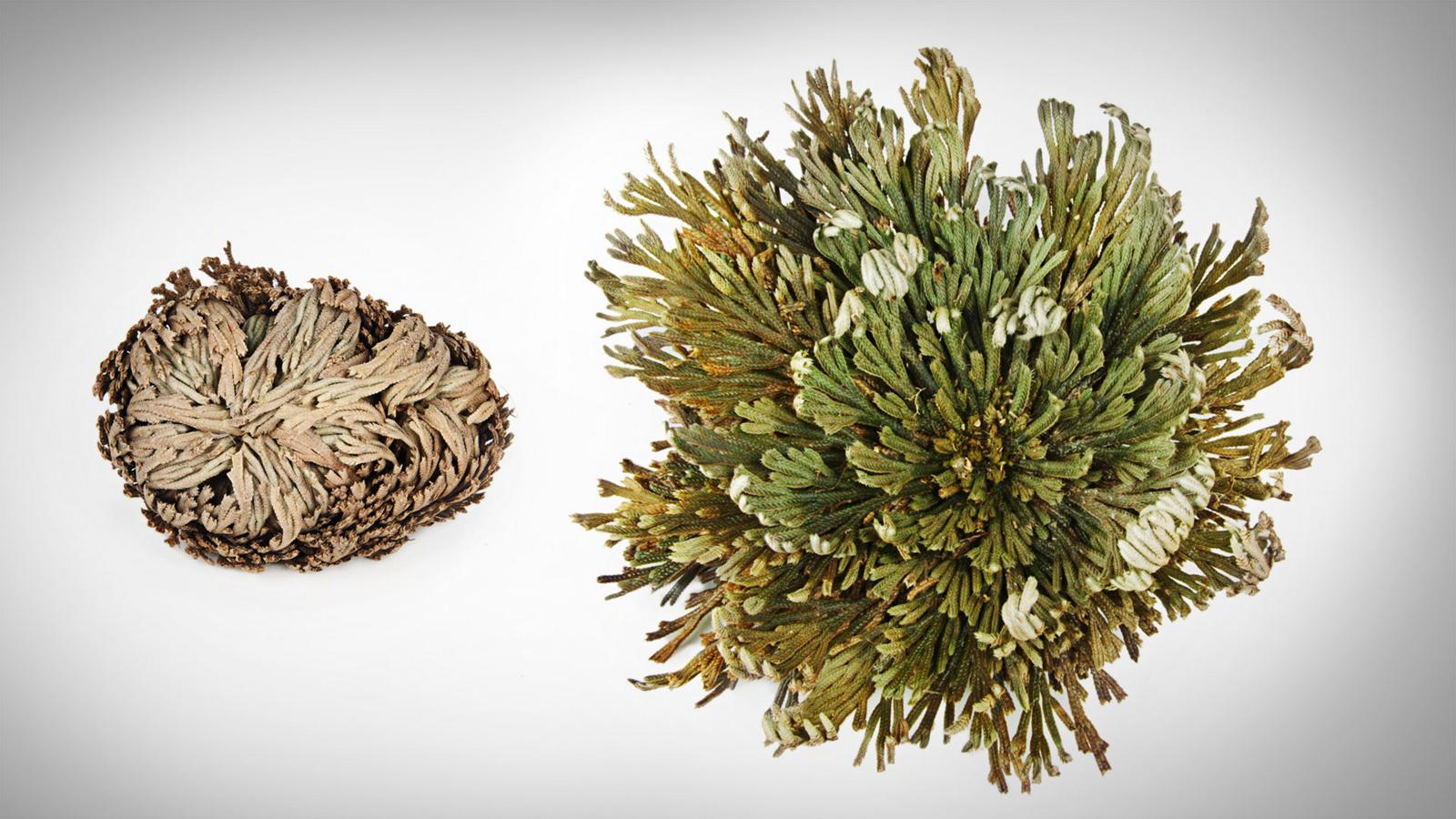
What Farrant saw was a “resurrection plant”, which can survive with no water for months to years. Seeing how quickly the plants recover is remarkable sight (Watch a timelapse in the video above at 1:30).
Now Farrant hopes to tap these abilities to transform food production. Resurrection plants have many of the same genes in their roots and leaves as seeds, so now she is trying to work out how to switch those genes in wheat, rice and maize crops so that they can survive droughts. See her explain how in the video at the top of the page.
(Credit: SPL)
Resurrection plants come back to life within 24 hours - watch the video above to see how (Credit: SPL)
The video above is part of a series called The Genius Behind: The most amazing and sometimes little known technological and scientific breakthroughs of modern times, and the innovative minds behind them.

Saturday, October 31, 2015

32,000-Year-Old Plant Brought Back to Life—Oldest Yet

http://news.nationalgeographic.com/news/2012/02/120221-oldest-seeds-regenerated-plants-science/#.Vha-QGgLUoA.facebook

Feat may help scientists preserve seeds for the future.
A plant grown from a 32,000-year-old seed.
A plant regenerated from 32,000-year-old seeds. 
The oldest plant ever to be regenerated has been grown from 32,000-year-old seeds—beating the previous recordholder by some 30,000 years. (Related: "'Methuselah' Tree Grew From 2,000-Year-Old Seed.")
Russian team discovered a seed cache of Silene stenophylla, a flowering plant native to Siberia, that had been buried by an Ice Age squirrel near the banks of the Kolyma River (map). Radiocarbon dating confirmed that the seeds were 32,000 years old.
The mature and immature seeds, which had been entirely encased in ice, were unearthed from 124 feet (38 meters) below the permafrost, surrounded by layers that included mammoth, bison, and woolly rhinoceros bones.
The mature seeds had been damaged—perhaps by the squirrel itself, to prevent them from germinating in the burrow. But some of the immature seeds retained viable plant material.
The team extracted that tissue from the frozen seeds, placed it in vials, and successfully germinated the plants, according to a new study. The plants—identical to each other but with different flower shapes from modern S. stenophylla—grew, flowered, and, after a year, created seeds of their own.
"I can't see any intrinsic fault in the article," said botanist Peter Raven, President Emeritus of the Missouri Botanical Garden, who was not involved in the study. "Though it's such an extraordinary report that of course you'd want to repeat it."
Raven is also head of National Geographic's Committee for Research and Exploration. (The Society owns National Geographic News.)
Plant Study May Help Seed Vaults?
The new study suggests that permafrost could be a "depository for an ancient gene pool," a place where any number of now extinct species could be found and resurrected, experts say.
"Certainly some of the plants that were cultivated in ancient times and have gone extinct or other plants once important to ecosystems which have disappeared would be very useful today if they could be brought back," said Elaine Solowey, a botanist at the Arava Institute for Environmental Studiesin Israel.
Solowey resurrected the 2,000-year-old date palm that previously held the title of oldest regenerated seed.
Her palm seed, though, had been buried in a dry, cool area, a far cry from the S. stenophylla seeds' permafrost environment.
Regenerating seeds that have been frozen at 19 degrees Fahrenheit (-7 degrees Celsius) for so long could have major implications, said Solowey, who was not involved in the new study.
That's because all seed-saving projects—the most famous being perhaps Norway's so-called doomsday vault, aka the Svalbard Global Seed Vault (see pictures)—depend on freezing seeds.
"Any insight gained on seeds which have been frozen and how to thaw them and sprout them is very valuable," she said.
The Missouri Botanical Garden's Raven added that, if we can uncover the conditions that kept the seeds viable for 32,000 years, then "if you were doing it yourself, you'd be able to preserve [seeds] for longer."
Regenerated-seed study published this week in the Proceedings of the National Academy of Sciences.